Helping Randy Feel Comfortable Again: Treating a Rare Eye Condition in a Young Cat
Ophthalmology

Randy, an 8-month-old Scottish Straight cat, was brought to Colorado Animal Specialty & Emergency (CASE) after suddenly squinting and pawing at his left eye. His symptoms appeared quickly and were not linked to any known trauma or prior eye issues, which raised concern for his owner.
An initial exam revealed swelling of the third eyelid. Diagnostic testing showed no corneal damage, and Randy was started on supportive eye lubrication while being referred to the CASE Ophthalmology team for further evaluation.
Evaluation and Diagnosis
When Randy was seen by Ophthalmology the following day, the swelling had not improved. Examination confirmed a prolapsed gland of the third eyelid, often referred to as “cherry eye.” While this condition is relatively common in dogs, it is rare in cats and typically requires surgical correction to prevent long-term irritation and complications.
Surgical Treatment
Randy was scheduled for surgery to return the gland to its normal position. During the procedure, the surgical team identified an additional abnormality: eversion of the third eyelid cartilage. This finding can interfere with proper healing if not addressed.
The affected portion of cartilage was surgically corrected, and the gland was repositioned using a technique designed to preserve tear production and eye health.
Recovery and Outcome
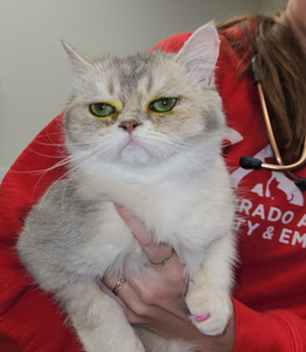
Randy recovered smoothly from surgery and went home with medications to support healing and comfort, along with instructions to wear a protective e-collar.
At his two-week recheck, Randy’s eye had healed well. The third eyelid remained in a normal position, there was no recurrence of swelling, and no ongoing inflammation was noted. Most importantly, Randy was comfortable and back to his normal behavior.
Why This Case Matters
Third eyelid conditions are uncommon in cats, and prompt diagnosis and treatment are key to preserving eye health. Randy’s case highlights how specialized ophthalmic care can lead to excellent outcomes, even in rare presentations.
At CASE, our ophthalmology team is committed to providing advanced, compassionate care for pets with complex eye conditions.
